Mobile Roaming Work
This articie was taken from www.roaming.gsmeurope.org
Roaming is defined as the ability for a cellular customerto automatically make and receive voice calls, send and receive data, or access other services when travelling outside the geographical coverage area ofthe home network, by means of using a network in the area visited.
Roaming is technically supported by mobility management, authentication and billing procedures. Establishing roaming between network operators is based on - and the commercial terms are contained in - Roaming Agreements
if the networkvisited is outside the home country, this is known as International Roaming.
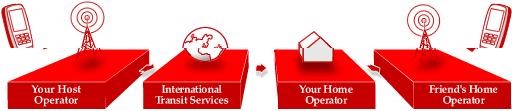
Who pays for what? Steps 1 and 2 The host operator charges your home operator a wholesale rate which includes the interconnection costs anternational Transit and costs for terminating the call) and its own network costs.
What you pay
Your next bill will include the above charges, plus other costs sustained byyour operator (i.e. commercial costs, overhead costs, IT costs), plus a profit margin applied byyour operator.
When abroad and being called frorn home
When a friend calls you from your home country, you are charged an international roaming price.
Who pays for what?
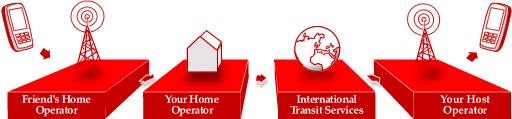
Step 1 Your friend will be charged a normal call by his home operator for calling you.
Steps 2 and 3 Your home operatorwill charge you a tariffwhich includes inter alia the international transitfees to forward the call to you in the destination country and the cost for terminating the call on the host network.
Your friend pays the standard national rate (step 1).
You as a roamer paythe above charges (steps 2/3), plus other costs (i.e. commercial costs, overhead costs, IT costs), plus any additional charge to provide a reasonable return on investment byyour home operator.